Brampton food hygiene and professional sanitation experts help you keep dining establishments, commissaries, bakeries, warehouses, and mobile food operations clean to code. They disinfect high-touch points, food-contact surfaces, equipment, floors, drains, restrooms, and prep zones using certified sanitizers, correct dilution, and documented contact times. in maintaining dining venues, commissaries, bakeries, warehouses, and food service units in compliance. They sanitize frequently touched areas, food preparation zones, equipment, floors, drains, restrooms, and food handling zones using certified sanitizers, correct concentration, and recorded contact times.
Key Takeaways
- Food safety cleaning technicians from Brampton support restaurants, grocery departments, commissaries, warehouses, bakeries, schools, mobile vendors, and allergen-sensitive operations.
- Cross-contamination avoidance is achieved by cleaning high-touch surfaces, food-contact equipment, kitchens, floors, drains, restrooms, and storage areas with sectional methods.
- Filing of finalization through tests, reviews, and remedial documentation verifies approved providers have verified proper chemical concentration, compatibility, and exposure duration.
- Effective maintenance timelines take into account hazard, production volume, transitions, releases, and regulations when allocating routine, recurring, and cyclical duties by section.
- Emphasize contractors displaying hazard analysis knowledge, public-health understanding, safety training instruction, liability, credentials, color-categorized implements, and compliance-ready sanitation documentation.
Brampton Establishments That Need Food Safety Cleaning: Which Ones?
You must maintain food safety cleaning if your facility is covered by health inspections, food codes, or HACCP protocols. This covers food venues, break rooms, food centers, supermarket areas, butcheries, seafood displays, shops, and commercial food prep.
You'll equally need adherent sanitation standards in supply facilities, manufacturing operations, cold storage warehouses, bakeries, school food programs, reception halls, and delivery services. Mobile and temporary operations are included, examples being food trucks, festival vendors, and pop-up establishments. When your team prepare supplies, portion finished foods, reheat items, or manage allergen inventory, your facility requires written cleaning standards. In Brampton, cleanliness remains required; it forms lawful, operational, and customer protection standards.
What Services Do Brampton Cleaning Experts Provide?
You need skilled cleaning experts who disinfect high-touch surfaces, cooking areas, flooring, and bathrooms to maintain food safety and public health requirements. These areas are targeted due to their high cross-contamination potential, slip and fall dangers, and health code violations.
By understanding their service scope, you are able to confirm your operation's sanitation protocols satisfy all operational and regulatory requirements.
Cleaning High-Touch Zones
Expert Brampton janitorial staff recognize that high-touch surfaces need sanitizing since these areas harbor pathogens and debris. You need a documented schedule for sanitizing all high-touch items including handles, plates, switches, railings, control surfaces, POS systems, and refrigeration equipment. Applying area assessment techniques, professionals determine every high-traffic area and set cleaning frequency
changing cleaning materials frequently, implementing directional cleaning methods, and organizing disinfection materials according to zone. Doing so maintains your disinfection program documented, well-documented, and inspection-ready continuously.
Kitchen Areas, Floor Surfaces, and Bathroom Spaces
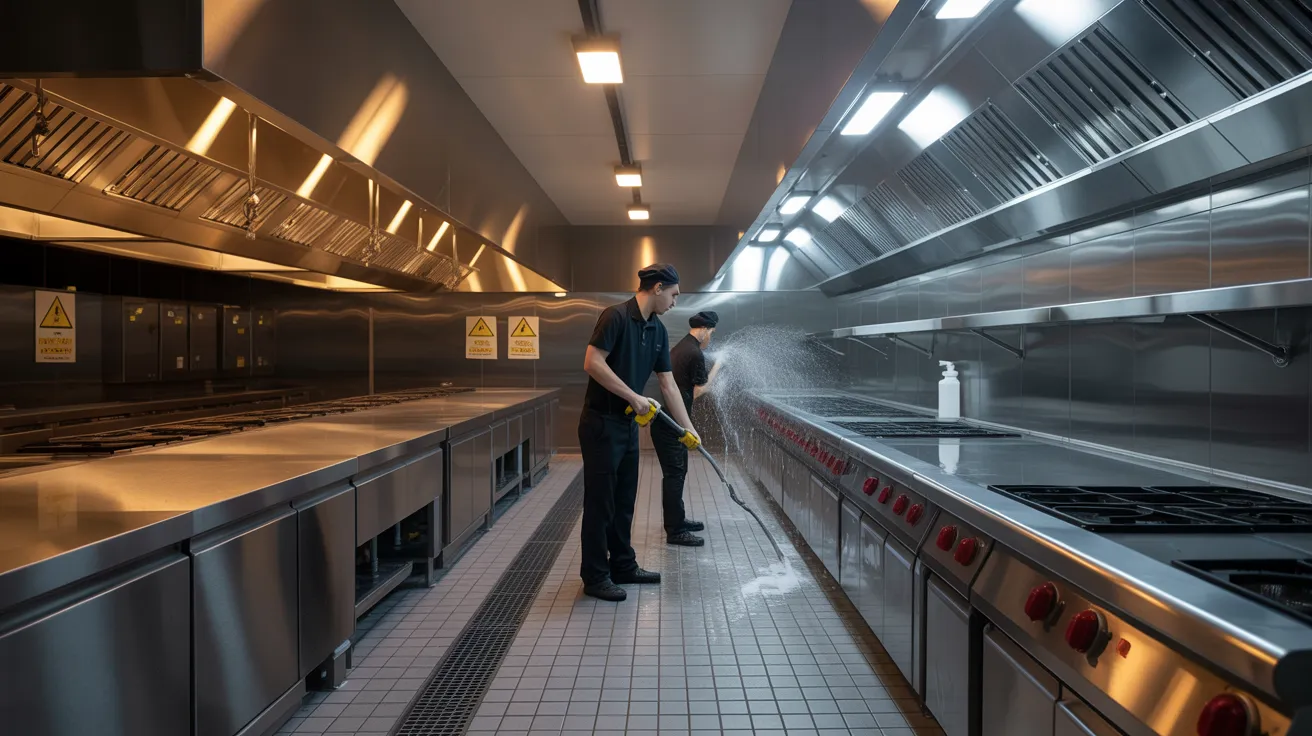
Brampton cleaning professionals will handle kitchens, floors, and restrooms since each space presents separate hygiene concerns, slip-and-fall, and community health challenges. In industrial kitchens, you need degreasing on cook lines, equipment exteriors, drains, prep surfaces, and splash zones to minimize contamination and pest pressure.
Professional floor upkeep with documentation is also included. is likewise provided as part of the service.
Restroom sanitation involves disinfecting touchpoints, fixtures, partitions, dispensers, and waste containers, replenishing amenities and managing odor. They also service restaurant moprooms, where chemical storage, sink hygiene, and drainage conditions can affect sanitation compliance and staff safety daily.
How Food Safety Cleaning Benefits Brampton Operations
In Brampton, you must maintain sanitary cleaning practices to satisfy regulatory standards and pass inspections. You also minimize cross-contamination by cleaning and sanitizing food-contact surfaces, equipment, and high-touch areas correctly. Most importantly, you safeguard public health by lowering the risk of foodborne illness in your facility.
Regulatory Code Requirements
Since Brampton food businesses must follow stringent health requirements, your sanitation practices directly impacts your capacity to satisfy health codes, ensure the safety of diners, and sidestep regulatory penalties. You must maintain clean food preparation areas, recorded sanitation plans, correct sanitizer application, and documented employee protocols that correspond to municipal and provincial inspection expectations.
Failure to maintain cleaning standards creates risks citations, corrective orders, loss of reputation, and temporary closure during further inspections or compliance reviews.
Contamination Control
Meeting regulatory requirements also depends on your ability to prevent cross-contamination during routine food preparation and sanitation. You must separate raw ingredients from ready-to-eat foods, sanitize prep surfaces between tasks, and keep cleaning products separate from food areas. Established guidelines minimize contamination chances and similar resource ensure ongoing adherence to health checks.
You should establish allergen separation to prevent major allergens from touching shared surfaces, containers, or equipment. Employ separate boards, labeled implements, and careful equipment identification so employees avoid combining products throughout cooking or serving. Require handwashing after handling raw meat, seafood, eggs, or allergen-containing products. Replace wiping cloths regularly, and check disinfectant potency using test kits. When staff members receive training on these procedures every shift, you build a more hygienic, secure workplace that satisfies Brampton's safety standards consistently.
Public Health Defense
When food safety cleaning weaken, you don't only face inspection setbacks—you expand the chance of foodborne illness striking customers, staff, and the larger Brampton community. You also undermine your responsibility in safeguarding community wellness, especially in busy food facilities where contamination can spread quickly through surfaces, equipment, and touchpoints.
You must establish sanitation protocols that remove contaminants, sanitize properly, and verify outcomes. This requires following exposure times, utilizing approved disinfectants, logging schedules, and training employees to satisfy regulatory standards. These mechanisms support pathogen reduction by decreasing microbes before reaching food or hands. Across Brampton, effective sanitation protects at-risk populations, reduces disease potential, and demonstrates accountability. When you follow standards, you exceed regulations—you meaningfully reduce risk and facilitate secure food handling city-wide.
How Does Cleaning Support Food Safety Compliance?
Maintaining comprehensive cleaning schedules ensures food safety compliance by decreasing contamination threats, managing pathogen expansion, and keeping your facility meeting sanitation requirements under HACCP-based programs and public health regulations. You confirm that product-contact areas are visibly clean and microbiologically controlled, facilitating documented preventive controls and inspection readiness.
Cleaning efforts additionally upgrade allergen management by eliminating residues that can trigger undeclared allergen exposure.
How Do You Plan Commercial Cleaning Services?
Establish cleaning schedules based on risk levels, production rates, and compliance requirements versus relying solely on a fixed calendar. You should arrange routine cleaning daily
Schedule drains, ventilation, storage racks, and hard-to-reach areas weekly or monthly, relying on inspection findings and sanitation records.
Finding Quality Brampton Cleaning Experts: A Guide
Start by screening providers against food sanitation standards, not cost only. You should verify that each company understands CFIA, public health, and HACCP-aligned expectations relevant to your facility. Ask for insurance documentation, WHMIS compliance, documented staff training, and supervision practices. Review whether technicians understand cross-contamination risks, chemical handling, and traceable sanitation records.
You should also assess business dependability and responsibility. Request references from Brampton food businesses, then examine response times, corrective actions, and communication standards. Confirm the company participates in supplier audits and can present inspection-ready documentation when regulators or third parties request evidence. Check whether equipment is maintained is performed, colour-coded tools are used appropriately, and facility-specific risks are recognized. A competent service protects regulatory adherence, product integrity, and your brand reputation.
What details should a Food Safety Cleaning Plan include?
Create a documented strategy that clarifies every sanitation task, standard, and responsibility before production begins. You should outline cleaning frequencies, approved chemicals, dilution rates, contact times, tools, and verification methods for each location, surface, and apparatus. Include pre-operational inspections, corrective actions, and employee training requirements.
Your strategy should also tackle prevention of contamination, waste management, pest-control tactics, and scheduled records for restrooms, drains, floors, and food-contact areas. Specify how you'll separate raw and ready-to-eat processes, facilitate ingredient tracking, and maintain accurate allergen labeling through validated cleaning between product changes. You should assign accountability, document signed records, and assess results against regulatory standards, HACCP controls, and customer requirements. When gaps appear, update procedures immediately and retrain staff.
Commonly Asked Inquiries
Can sanitation providers accommodate overnight shifts in Brampton facilities?
Yes, you can set up cleaning services to manage nighttime operations in Brampton facilities. You'll arrange nighttime cleaning around production schedules, access requirements, and personnel requirements. Providers generally establish nightshift logistics to prevent disruption, maintain standards, and log completed work. You should confirm timeframes, oversight, lockout protocols, and waste management before service starts.
Will sanitation professionals address hazardous incidents?
Yes, you can locate Brampton cleaning professionals providing hazard containment services. They manage contamination, assess dangers, isolate contamination, and begin swift decontamination to reduce risk and avoid operational impact. You should confirm timeframes, certifications, safety protocols, and disposal methods. If your facility must meet compliance standards, select a service that documents events, adheres to standards, and ensures audit compliance.
Do green disinfectants operate safely on surfaces contacting food?
Absolutely, natural disinfectants remain appropriate for food-handling equipment when you choose solutions certified for food use and complying with regulations. You must confirm contact times, dilution ratios, and rinse requirements in advance of use. Botanical formulations lower toxic chemical contact, though you must obtain evidence of effectiveness against relevant pathogens. For preserving residue-free areas, follow manufacturer instructions exactly and confirm your cleaning agent satisfies food industry regulations.
Do cleaning schedules allow for seasonal variations?
Yes, you can modify cleaning schedules for production fluctuations. You should revise frequencies, staff levels, chemicals, and validation steps to fit production rhythms while upholding regulatory requirements. You'll reduce production downtime by scheduling sanitization around equipment transitions, peak volumes, and operational patterns. You should additionally update standard operating procedures, training, and environmental monitoring to account for transient threats, novel allergens, or elevated soil levels. Ongoing evaluations maintain your schedule efficient.
Do professional cleaning services educate employees on sanitation best practices?
Certainly, commercial cleaners train your employees on sanitation best practices. You obtain employee development on proper chemical use, contact times, contamination control, equipment disassembly, and documentation procedures. They generally coordinate coaching with HACCP, GMP, and CFIA or local public health standards. Many also run sanitation audits to verify compliance, identify gaps, and strengthen corrective measures. This enables you to maintain consistent procedures, satisfy audits, and minimize foodborne pathogen risks daily.
Conclusion
Partnering with Brampton food safety and commercial cleaning experts goes beyond tidying—it guarantees your operation stays inspection-compliant and your standards are defensible. From processing facilities to kitchens, each cleaned area and organized section reduces health hazards and avoids costly disruptions. By scheduling maintenance at suitable frequencies and executing a comprehensive cleaning strategy, you protect staff, clients, and your image. In a heavily regulated sector, clean environments can't be overlooked—they're critical to business success.